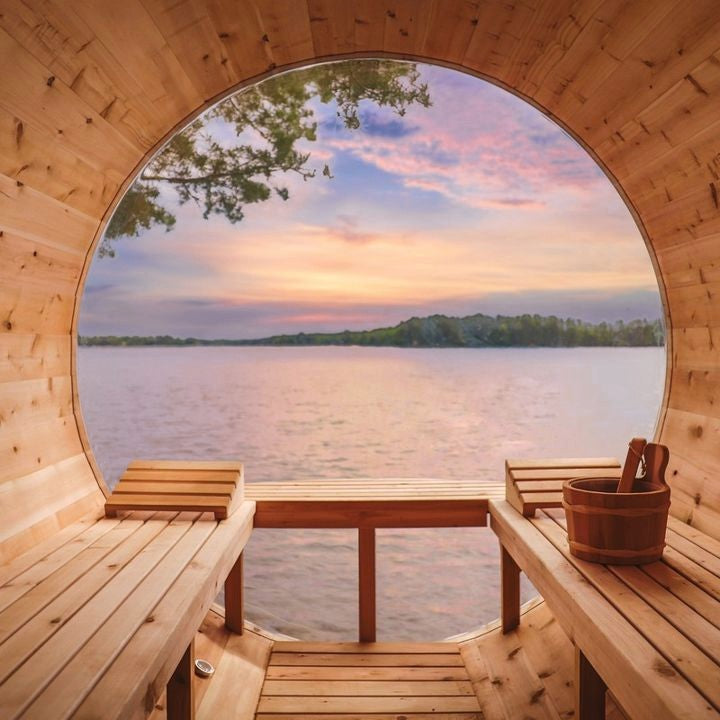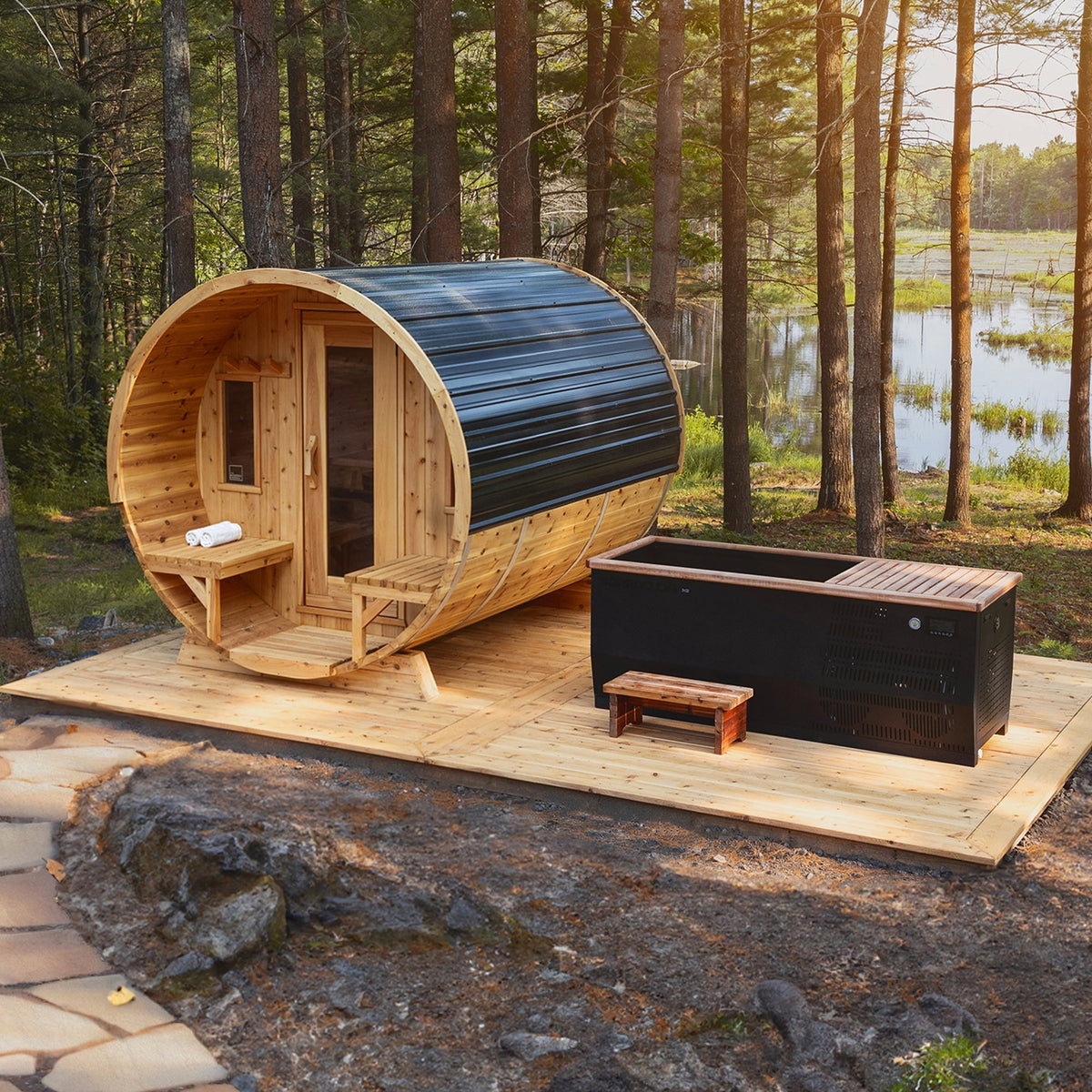
If you have spent any time searching for a barrel sauna in Canada, you have probably noticed how many options are out there. The rounded shape, the cedar smell, the classic Nordic look, it is easy to see the appeal. But choosing a barrel sauna for a Canadian property is a bit different than shopping for one in a milder climate. Snow load, freeze and thaw cycles, and long stretches of deep cold all matter here. This post walks through what actually makes a barrel sauna work well in Canada, so that when you are ready to browse, you know what you are looking at.
Why Barrel Saunas Suit the Canadian Backyard
The barrel shape is not just a style choice. The curved wall design allows heat to circulate more evenly than a boxy structure, and it sheds snow and rain naturally off the rounded roof rather than letting it pool. For a country where many of us get significant snowfall, that self-shedding roofline is a genuine practical advantage, not just an aesthetic one.
Barrel saunas also tend to have a smaller footprint than cabin-style saunas, which makes them a good fit for smaller lots, cottage properties, or backyards where you want to preserve as much green space as possible. Many homeowners in Muskoka and across Ontario cottage country choose barrel saunas for exactly this reason: they deliver a genuine sauna experience without dominating the yard.
Traditional Wood-Fired or Electric
Most barrel saunas can be set up with either a wood-fired stove or an electric heater. Wood-fired units are popular at the cottage where you want that classic ritual of tending a fire, while electric heaters suit properties with easy access to power and a preference for convenience. If you are unsure which is right for your situation, our guide on wood stoves versus electric heaters breaks down the pros and cons in more detail.
What Canadian Winters Ask of a Barrel Sauna
Canada is not a single climate. A barrel sauna in coastal British Columbia deals with damp winters, while one in Muskoka or the Prairies faces deep freezes and heavy, wet snow. A well-built barrel sauna should be able to handle all of it, but the details matter.
- Wood species and thickness: Cedar is the traditional choice for good reason. It resists rot and insects naturally and holds up well to moisture cycling. Thicker stave walls generally retain heat better in cold weather.
- Foundation and ground contact: A barrel sauna needs a stable, level base that accounts for frost heave. Skids or a properly prepared pad help the structure stay sound through freeze and thaw seasons.
- Roof and snow load: The curved roof helps shed snow, but very heavy accumulation should still be cleared periodically depending on your region.
- Insulation and heater sizing: A heater that is undersized for the space, or a sauna without adequate insulation in the door and windows, will struggle to reach and hold temperature on the coldest days.
For a deeper look at how outdoor saunas of any style are built to handle harsh winters, our post on best outdoor saunas for harsh winters covers construction details worth understanding before you buy.
Cedar vs. Thermowood in a Barrel Sauna
Most barrel saunas sold in Canada are built from either Eastern white cedar, Western red cedar, or thermally modified wood (thermowood). Each has different characteristics when it comes to moisture resistance, colour, and how the wood ages outdoors. If you are comparing options, it is worth reading our comparison of cedar versus thermowood for saunas so you know what you are getting before you commit.
Sizing a Barrel Sauna for Your Household
Barrel saunas typically range from compact two-person units to larger models that seat five or six. Think honestly about how you will use it. A couple who saunas together most weekends has different needs than a family that wants room for guests. Keep in mind that barrel interiors are more compact than a rectangular cabin sauna of the same footprint, since the curved walls reduce usable bench space near the floor.
Indoor or Outdoor Barrel Sauna
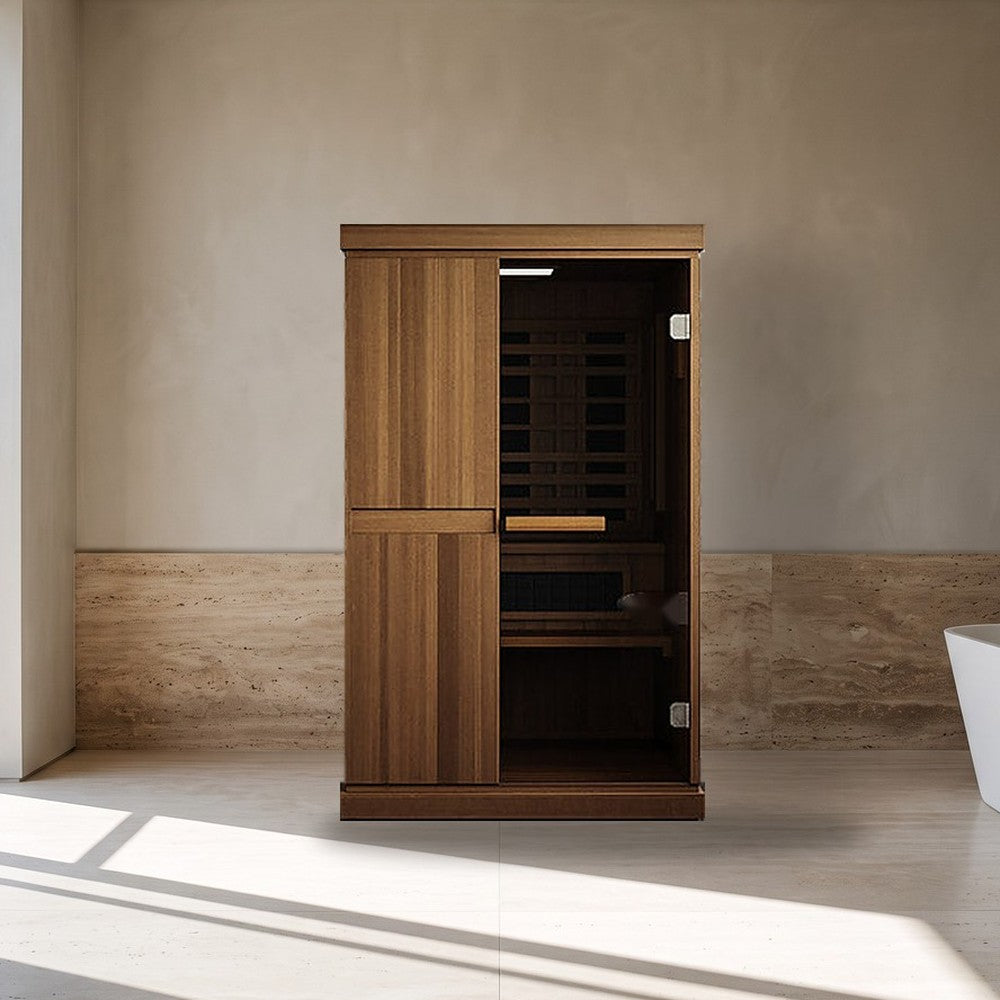
While barrel saunas are most commonly installed outdoors, some homeowners do install smaller units indoors, in a garage, basement, or dedicated wellness room. Each setup comes with its own ventilation and moisture management considerations. We cover this comparison in detail in Indoor vs. Outdoor Cedar Barrel Saunas: Which Is Right for You?, which is worth a read if you have not already settled on a location for yours.
Delivery and Installation Considerations
Barrel saunas are generally delivered pre-built or in large sections, which simplifies setup compared to a stick-built cabin. That said, site access matters. A narrow gate, a sloped yard, or a dock-only cottage property can all affect how a barrel sauna gets to its final spot. It is worth discussing your site access with your supplier before you order.
Our favourite way to do it is to build your sauna right on site. Our crew brings everything in, puts it together on your base, and you’re ready to go.
To make install day smooth, here’s what we need from you:
- A clear path at least 6 ft wide all the way to where the sauna is going
- At least 8 ft of overhead clearance along that path (watch for wires, branches and eaves)
- Firm, safe footing along the path, with nothing steep, loose or slippery
- Gates opened or removed, and fences, furniture and other obstacles out of the way
- 4 ft of clear working space on all sides of the base while we build
- In winter, snow and ice cleared from the path and the base.
Your base should be level, sturdy and well drained, and at least as big as the sauna. A gravel pad, concrete slab, deck or patio stones all work.
If you’re a DIY’er, we can deliver the kit right to your doorstep and you can build it yourself.
Choosing a Well-Built Barrel Sauna
Not all barrel saunas are built to the same standard. When comparing options, look closely at the joinery (tongue and groove staves fit more tightly than simple butt joints), the quality of the door seal, and whether the benches and floor are made from wood that tolerates humidity well. A sauna that looks similar in a photo can perform very differently once it is sitting in a Muskoka winter.
If you want to browse well-built options designed with the Canadian climate in mind, our cedar barrel sauna collection is a good place to start comparing sizes, heater options, and wood finishes side by side.
Frequently Asked Questions
Can a barrel sauna be used year-round in Canada?
Yes, most well-built barrel saunas are designed for four-season use in Canada, provided they have adequate insulation, a properly sized heater, and a stable foundation. Many owners find the contrast between the heat inside and the cold air outside part of the appeal, particularly in winter.
Do barrel saunas need a permit in Canada?
This depends entirely on your municipality, the size of the structure, and whether it is considered a permanent installation. Requirements vary widely across provinces and even between neighbouring townships. Getting any permits or approvals is the homeowner’s responsibility, so check your local permit and setback rules before you install.
If you do apply for a permit, we’re happy to send product documentation to help you through the process.
How long does a cedar barrel sauna last outdoors in Canada?
Cedar is naturally durable and resists rot and insects, which helps it hold up well through the winter and humid summers. Lifespan depends on maintenance, sun exposure, and how the sauna is cared for over time. Our guide on cleaning and maintaining your sauna covers the upkeep that helps extend its life.
If you are weighing a barrel sauna for your property, we would be glad to help you think it through, whether that means talking through site conditions, heater choice, or sizing for your household. Browse our cedar barrel sauna collection to see what is available, or reach out to our team with your questions. We are happy to help you choose well.