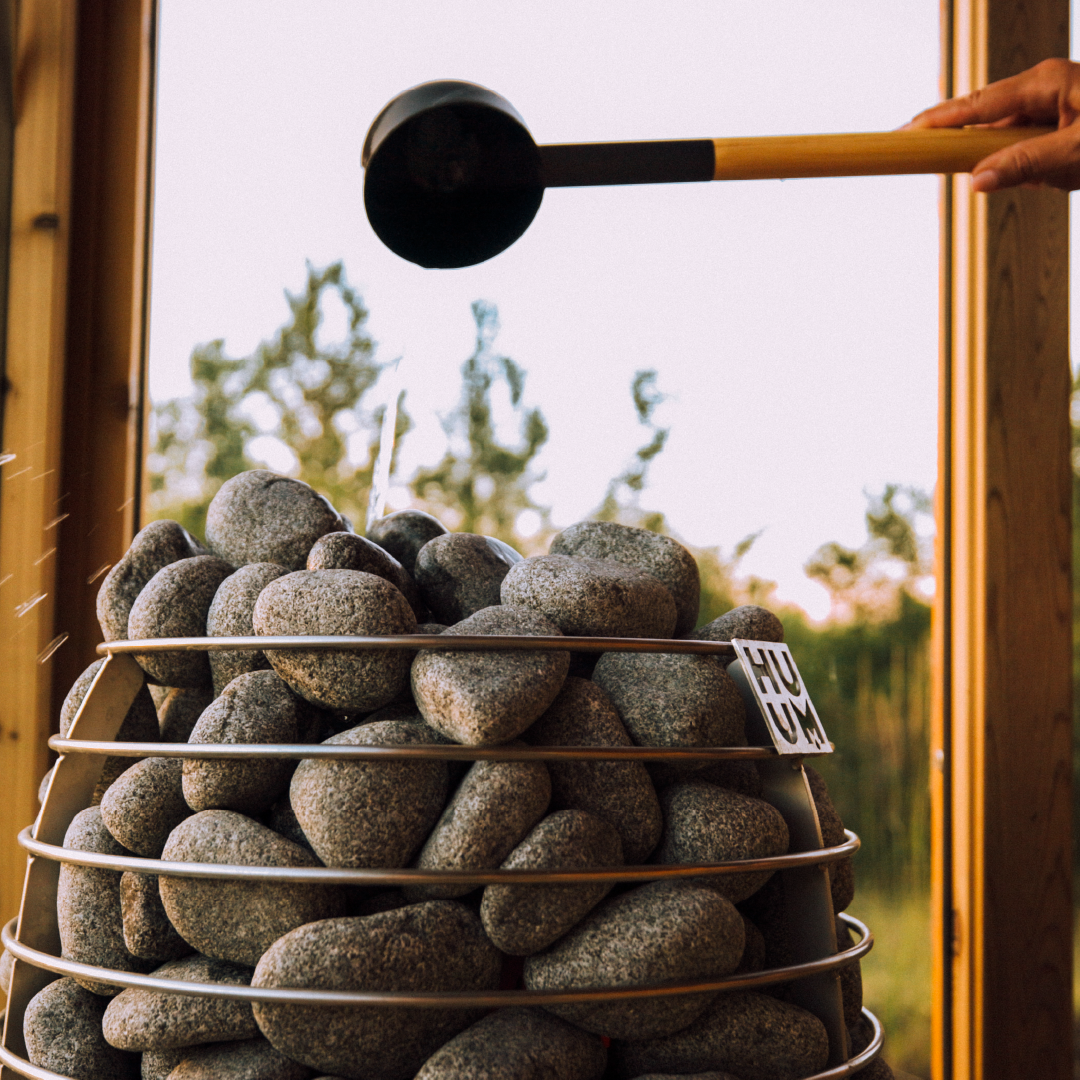
Close your eyes for a moment. Imagine the weight of cedar in your hands — a smooth, hand-turned ladle worn soft with use. You pour slowly, deliberately. Water meets stone with a breath-catching hiss, and the air blooms open with eucalyptus. Steam rises in waves. The world outside falls away.
This is not simply a sauna session. This is a ceremony — one shaped as much by the tools and accessories you bring into the room as by the heat itself. In the Finnish-Canadian tradition, both cultures take sauna ritual seriously: not as a luxury, but as a practice woven into the rhythm of daily life, a discipline of warmth and stillness passed from generation to generation.
At Muskoka Sauna Co., we believe that every detail matters. The right accessories do not merely add comfort — they elevate the entire experience, transforming your sauna into a sanctuary where each session becomes intentional, sensory, and deeply restorative. This guide curates the essential tools for building a complete sauna ritual, from the foundational to the transcendent.
The Essentials: Foundational Tools of the Sauna
Every sauna ritual begins with a core set of tools, each one carrying centuries of tradition. These are not optional extras — they are the architecture of the experience itself.
The Ladle and Bucket
The ladle is the conductor's baton of the sauna. With a single practiced pour, you orchestrate the entire atmosphere of the room. A premium cedar or alder ladle, long-handled and balanced, allows you to direct water precisely onto your sauna stones with control and intention. Paired with a matching wooden bucket, the set becomes both functional object and an aesthetic statement — a reminder that beauty and purpose need not be in conflict.
Choose a ladle with a handle long enough to reach your stones comfortably from a seated position. Look for tight grain and smooth finish; rough wood absorbs moisture unevenly and will not age as gracefully. A bucket with proper wooden staves and durable steel or copper bands will last decades with minimal care.
Sauna Stones
Not all stones are created equal. The right sauna stones — dense, heat-retentive volcanic rock such as olivine diabase or peridotite — absorb heat slowly and release it in long, even waves. Inferior stones crack, crumble, and fail to deliver the deep, enveloping löyly (the Finnish word for the sacred steam) that defines a genuine sauna experience.
Fill your stone tray completely and replace stones every two to three years, or whenever you notice cracking or significant deterioration. The quality of your stones directly shapes the quality of your steam. For our Superior Hydra Sauna and Neptune Sauna, we recommend starting with a generous 15–20 kg load to ensure the thermal mass needed for a sustained, powerful session.
Headrests and Backrests
Comfort and posture are not afterthoughts in sauna design — they are fundamental to how deeply you can relax and how long you can remain in the heat. A quality cedar or aspen headrest allows you to recline fully without strain, bringing your entire body to the same temperature level and maximising the therapeutic benefits of the session.
Ergonomic backrests contoured to the spine support proper posture while allowing full muscular relaxation. Look for slatted designs that permit airflow against the back — solid surfaces trap heat uncomfortably. Both accessories should be crafted from untreated wood that will not off-gas in high heat.
Thermometer and Hygrometer
Precision is part of the ritual. A well-calibrated sauna thermometer and hygrometer — ideally combined in a single artisan wooden instrument — allow you to read and fine-tune your environment with the confidence of a practitioner. The ideal sauna temperature ranges from 70°C to 100°C (160°F to 212°F); relative humidity, adjusted through your water pours, typically sits between 10% and 20% for a dry Finnish experience, rising with each round of löyly.
Mounted at upper bench level where your head rests, these instruments become part of the visual language of the room — and give you the data to make every session exactly what you intend it to be.
Elevating the Experience: The Art of the Sauna Ritual
Once the foundations are in place, the opportunity to truly curate your sauna ceremony opens before you. These accessories do not simply enhance comfort — they engage every sense and deepen the meditative quality of the session.
Essential Oils and Sauna Aroma
The olfactory dimension of the sauna experience is profoundly underestimated. A few drops of pure essential oil — eucalyptus for respiratory clarity, birch tar for that deep, smoky Nordic note, pine for forest-floor grounding, or lavender for an evening session designed to carry you toward sleep — added to your water bucket transforms a simple pour into an immersive sensory event.
Use only pure, food-grade or sauna-specific essential oils diluted properly in water before pouring onto stones. Never apply oils directly to hot stones without dilution, as undiluted oils can flash and produce harsh, acrid smoke rather than the refined aromatic steam you are seeking. Start with three to five drops per litre of water and adjust to taste.
The Sauna Whisk — Vihta
The vihta (or vasta in some Finnish dialects) is perhaps the most ancient and celebrated sauna accessory: a bundle of fresh or dried birch branches, leaves intact, soaked in warm water until supple, then used to gently beat the skin in rhythmic, sweeping strokes. The practice stimulates circulation, opens pores, exfoliates the skin, and releases the incomparable fresh-birch fragrance that has perfumed Finnish saunas for millennia.
Birch is traditional and remains the gold standard, but oak vihtas offer a firmer stroke for those who prefer more vigorous treatment, while eucalyptus bundles bring their own aromatic dimension to the ritual. A properly prepared vihta should feel like a warm, leafy embrace — never harsh against the skin.
Sauna Lighting
Light shapes atmosphere more powerfully than almost any other variable. Harsh overhead lighting destroys the contemplative quality of a sauna session; warm, low-level illumination invites the nervous system to release its vigilance and settle into the heat. Consider dimmable LED sauna lights in amber or warm white tones positioned at bench level or along the floor — light that glows rather than blazes.
Salt crystal lamps, where appropriate for the heat environment, cast a living amber warmth that shifts and breathes with the convective air of the room. Candle lanterns designed for sauna use add a flickering intimacy that no electric source can quite replicate. The investment in considered lighting transforms the visual experience of every session.
Sound and Silence
The sauna is, at its most essential, a place of silence — and that silence is itself an experience worth curating. Some practitioners prefer the unadorned soundscape of crackling heat and the occasional hiss of steam. Others find that subtle, carefully chosen ambient music — slow, spacious, minimal — deepens the meditative quality of the session without intruding upon it.
If you choose to introduce sound, invest in a sauna-rated Bluetooth speaker with protection against humidity. Position it outside the immediate sauna environment if possible, with sound travelling through a small opening, to protect the speaker and allow easy control without breaking the ritual. And always leave space for the silence — it is, perhaps, the most powerful accessory of all.
Sauna Care and Maintenance Tools
A well-maintained sauna is a sauna that lasts for decades and rewards every session with the same pristine quality. The right maintenance tools are not glamorous, but they are essential — and caring for your sauna is itself a form of respect for the ritual.
A natural fibre brush with long, stiff bristles allows you to scrub bench surfaces with clean water after each session, removing salts and organic residue before they can penetrate the wood. A squeegee or floor brush moves water efficiently toward your floor drain. A dedicated sauna cleaning solution — plant-based, fragrance-free, and designed not to off-gas in heat — should be used for deeper periodic cleaning of benches and walls.
Sauna bench protectors — small wooden or hemp sitz cloths — protect wood surfaces from direct body contact and are far easier to wash than the benches themselves. Keep a supply on hand and rotate them regularly. For your heater, follow manufacturer guidelines for stone inspection and replacement; well-maintained stones and a clean heater are the foundation of consistent, powerful steam.
Discover more about the long-term health benefits of regular sauna use and how proper maintenance ensures you can enjoy them for years to come.
Cold Plunge Accessories
The sauna experience reaches its full therapeutic expression in contrast — the dramatic transition from profound heat to cold immersion. The physiological response to this contrast, a powerful cardiovascular and lymphatic activation, has been central to Nordic wellness traditions for centuries. Our cold plunge collection pairs perfectly with any sauna to complete this ancient practice.
Essential cold plunge accessories begin with a reliable thermometer calibrated for water temperature — your target range for therapeutic cold immersion is typically 10°C to 15°C (50°F to 59°F). A chiller unit that maintains consistent temperature removes the guesswork and allows you to repeat the contrast cycle with precision across an entire session.
Poolside robes — heavy, absorbent, and long enough to wrap fully around the body — are essential for the transition moments between sauna and plunge and back again. Choose natural fibres: Turkish cotton for absorbency, or a weighted waffle weave that holds warmth while still allowing the skin to breathe. Non-slip sandals rated for wet surfaces protect you during those barefoot moments between environments.
A timer — analogue or simple digital — helps you build structured contrast cycles: 15 minutes in the sauna, two minutes in the cold plunge, ten minutes of rest. Structured contrast is not merely more comfortable; the evidence suggests it is more effective. Pair your cold plunge practice with a simple journal to track your sessions and the way your body responds over time.
Building Your Complete Sauna Kit
The beauty of curating a sauna accessory collection is that it need not happen all at once. Begin with the foundational essentials — a quality ladle and bucket, premium sauna stones, a thermometer and hygrometer — and build deliberately from there. Each addition should feel intentional, chosen for how it will deepen the experience you are creating.
Consider your sauna environment as you build your kit. An outdoor sauna on a Muskoka lake suggests different accessories than an indoor installation — the natural setting already provides much of the atmosphere, and your tool choices can be simpler and more rugged. A cedar barrel sauna with its intimate proportions calls for scaled accessories that respect the architecture of the space.
Our Hudson Sauna pairs beautifully with a full artisan accessory suite — ladle, bucket, vihta, aromatic oils, and a complete contrast kit — for those who want to step into a fully realised ritual from day one.
The Finnish-Canadian tradition reminds us that the sauna is not a destination but a practice — one that deepens with every session, every season, every carefully chosen accessory that becomes worn smooth with use and memory. Invest thoughtfully. Curate slowly. Let the ritual find its own shape.
We invite you to connect with our team to discuss the perfect accessory kit for your sauna. Whether you are outfitting a new installation or elevating an existing space, we are here to guide every choice with the same intention we bring to everything we build.
Frequently Asked Questions
What are the most essential sauna accessories to start with?
Begin with the three foundational tools: a quality wooden ladle and matching bucket for your water pours, premium volcanic sauna stones for consistent steam, and a combined thermometer and hygrometer so you can read and shape your environment with precision. These three elements are the architecture of every other experience you will build in the sauna room.
How do I use essential oils safely in the sauna?
Always dilute pure essential oils in water before pouring — three to five drops per litre is a reliable starting point. Never apply undiluted oil directly to hot stones, as this can cause harsh, acrid smoke rather than the refined aromatic steam you are seeking. Choose sauna-specific or food-grade pure essential oils; fragrance oils and synthetic blends are not appropriate for high-heat environments.
What is a vihta and how do I prepare one?
A vihta (also called a vasta) is a bundle of fresh or dried birch branches used to gently beat the skin during a sauna session. To prepare a dried vihta, soak it in warm water for 20 to 30 minutes before your session until the leaves are soft and supple. The gentle beating action stimulates circulation, opens pores, and releases the incomparable fresh-birch fragrance central to the Finnish sauna tradition.
How often should I replace my sauna stones?
Inspect your sauna stones every six months and replace them every two to three years, or sooner if you notice significant cracking, crumbling, or deterioration. Degraded stones lose their ability to hold and release heat evenly, compromising the quality of your steam and potentially sending stone fragments into the heater. Start each replacement cycle with a full, generous load of premium volcanic rock.
What cold plunge temperature is most effective?
The therapeutic sweet spot for cold plunge immersion sits between 10°C and 15°C (50°F to 59°F). This range is cold enough to trigger the powerful cardiovascular and lymphatic response at the heart of contrast therapy, while remaining accessible for regular practice. Use a calibrated water thermometer and, if possible, a chiller unit to maintain consistent temperature across your entire session and from one session to the next. Begin with shorter immersions of 30 to 60 seconds and extend duration gradually as your tolerance builds.