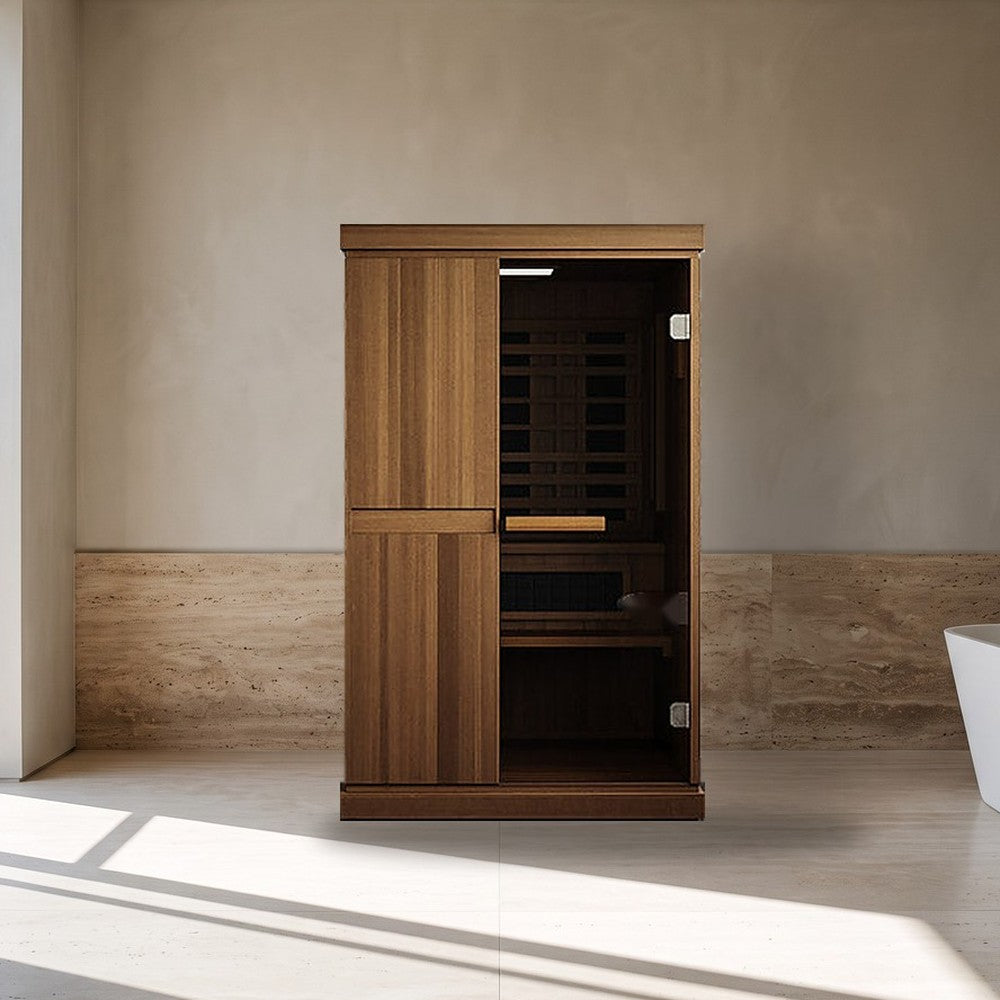
It's one of the most searched questions in the wellness world: does sauna burn calories? The honest answer is yes — but the more important answer is how, and why that matters far less than what a sauna actually does well. If you're hoping the heat will replace your morning ski or evening skate, this article will give you a grounded, evidence-based perspective. And if you're already active and simply want to know how sauna fits into a holistic recovery and metabolic ritual — read on. The picture is genuinely compelling.
At Muskoka Sauna Co., we believe in the restorative power of heat, earned honestly. Our saunas are built for people who move hard, breathe cold air, and want to recover with intention. Learn more about the full spectrum of sauna health benefits or explore our sauna collection to find the right fit for your home or property.
The Short Answer: Yes, But Set Realistic Expectations
A typical sauna session does burn calories — somewhere in the range of 100 to 300 calories per session, depending on your body weight, session duration, and the temperature of your sauna. That's meaningful, but it's not magic. A single 30-minute session at 85°C won't offset a large meal or replace a workout. What it will do is create a genuine metabolic stimulus that, over time and paired with an active lifestyle, contributes meaningfully to your overall wellness picture.
The key is framing. Sauna is not a weight-loss tool — it's a recovery and metabolic optimization ritual. Once you accept that distinction, everything about how you use it becomes clearer, and more effective.
The Science: What Happens to Your Body in a Sauna
When you step into a Muskoka sauna and the heat begins to immerse you, your body initiates a cascade of physiological responses that are genuinely remarkable. Within the first few minutes, your core body temperature begins to rise. Your cardiovascular system responds by increasing heart rate — often reaching 100–150 BPM in a moderate session — in order to pump blood to the skin surface for cooling through sweat.
This cardiovascular effort is real work. Studies have compared the cardiac demand of a sauna session to a brisk walk — not a sprint, but a sustained, meaningful effort. Your sweat glands activate, and your body loses fluid — primarily water and electrolytes — as it works to maintain thermal regulation. Meanwhile, your metabolic rate increases as your body burns energy to sustain this elevated state.
The key mechanisms at play:
- Elevated core temperature — drives thermogenic calorie burn
- Increased heart rate — cardiovascular stimulus without mechanical joint load
- Vasodilation — improved blood flow to muscles and periphery
- Sweat response — fluid loss (temporary; must be replenished with water)
- Hormonal shifts — including growth hormone release at high heat exposure
It's worth emphasizing: the weight lost immediately after a sauna is largely water weight. It returns when you rehydrate. The caloric burn, however, is real and cumulative.
How Many Calories Does a Sauna Session Burn?
Research suggests the following honest ranges for a 30-minute sauna session:
- 150 lb (68 kg) person: approximately 100–150 calories
- 185 lb (84 kg) person: approximately 130–185 calories
- 220 lb (100 kg) person: approximately 160–230 calories
Longer sessions (45–60 minutes) at higher temperatures can push toward the 250–300 calorie range for larger individuals. Traditional Finnish-style saunas running at 80–100°C will produce a stronger thermogenic effect than lower-temperature infrared models at equivalent durations.
These figures represent roughly 1.5–2x your resting metabolic rate — a real elevation, but modest compared to vigorous exercise (which can reach 6–10x resting metabolic rate). Think of it as your body idling at a higher RPM rather than running at full throttle.
The caloric burn is most accurately described as a supplement to an active life — not a replacement for movement. For Canadians already skiing, skating, hiking, or paddling through the seasons, regular sauna use adds a meaningful layer to an already active metabolic baseline.
Sauna vs. Exercise — Understanding the Difference
A common question: is a sauna session equivalent to a workout? The short answer is no — but that framing misses the point entirely. They are complementary tools, not competitors.
Exercise builds muscle, improves VO2 max, drives fat oxidation, and creates the structural adaptations that define fitness. Sauna enhances recovery from that exercise, reduces the cortisol burden of training, improves cardiovascular tone, and creates hormonal conditions that support muscle repair and body composition over time.
A hockey player who skips the post-game sauna and heads straight to bed is leaving recovery gains on the table. A skier who adds 20 minutes of heat immersion after a hard day on the mountain — and follows it with a cold plunge — is doing something qualitatively different from simply lying down. The sauna accelerates the return to baseline and creates conditions for super compensation.
So, sauna does not replace exercise. But for those already exercising — which describes most of our customers — it meaningfully amplifies the results of that exercise.
Where Sauna Truly Shines for Body Composition
The most compelling metabolic case for sauna isn't the direct caloric burn — it's the downstream hormonal environment it creates. Here's where the evidence-based picture gets genuinely exciting:
Cortisol Reduction
Chronic elevated cortisol — the stress hormone — is one of the primary drivers of abdominal fat accumulation and metabolic dysregulation. Regular sauna use has been shown to reduce cortisol levels, particularly when sessions are structured as genuine rest (no phone, no stimulation, eyes closed, breathing slowly). For Canadians navigating high-pressure work environments alongside active lifestyles, this parasympathetic reset is profoundly valuable.
Growth Hormone Release
One of the most striking findings in sauna research: a single heat stress protocol can elevate growth hormone levels by 200–300%. Growth hormone plays a central role in fat metabolism, muscle preservation, and recovery. This effect is temperature-dependent — traditional saunas running above 80°C produce significantly greater GH responses than lower-temperature alternatives.
Improved Insulin Sensitivity
Regular sauna use has been associated with improved insulin sensitivity — the body's ability to efficiently utilize glucose. Better insulin sensitivity supports leaner body composition and reduces the risk of metabolic syndrome over time.
Enhanced Recovery
Faster recovery from training means more consistent training. Athletes who can return to full capacity sooner do more total work over a season. The compounding effect of better recovery — whether you're a weekend skier or a committed trail runner — is one of the most underappreciated metabolic benefits of a regular sauna ritual.
Discover the Superior Hydra Sauna or the Neptune Sauna — two of our most popular models for serious wellness practitioners.
The Best Sauna Protocol for Metabolic Benefits
If your goal is to maximize the metabolic and body composition benefits of sauna, protocol matters. Here's what the evidence supports:
- Temperature: 80–100°C (traditional Finnish-style) for maximum hormonal response
- Duration: 15–25 minutes per round, 2–3 rounds per session
- Frequency: 4–7 sessions per week for cardiovascular and metabolic benefits (Finnish research supports daily use as safe and beneficial)
- Timing: Post-exercise is ideal — the body is already in a catabolic/recovery state and the sauna amplifies the anabolic rebound
- Hydration: Drink 500ml of water before, and replenish aggressively after — electrolyte-rich water or coconut water is ideal
- Mindset: Treat the sauna as a ritual, not a chore. No phones. Eyes closed. Slow, deep breathing. This maximizes the parasympathetic shift.
Explore our range of cedar barrel saunas and outdoor saunas — designed to make this ritual a permanent, beautiful part of your property.
Pairing Sauna with Cold Plunge for Maximum Effect
If sauna is the accelerator, cold plunge is the ignition switch. The contrast protocol — alternating between heat immersion and cold immersion — creates one of the most powerful metabolic and recovery stimuli available outside a laboratory.
Here's what happens physiologically when you pair the two:
- Norepinephrine surge: Cold water immersion can increase norepinephrine levels by 200–300%, a neurotransmitter deeply involved in mood, focus, and fat mobilization
- Brown adipose tissue activation: Regular cold exposure activates brown fat — metabolically active tissue that burns calories to generate heat
- Vascular conditioning: The rapid vasodilation (heat) followed by vasoconstriction (cold) is sometimes called a "vascular workout" — it trains the circulatory system in ways that support long-term cardiovascular health
- Dopamine reset: The protocol produces a sustained dopamine elevation that can last hours — supporting mood, motivation, and energy levels through the remainder of your day
The traditional Canadian contrast ritual — sauna followed by a roll in the snow or a plunge into a cold lake — is more than folklore. It's evidence-based wellness, refined over generations. We've built it into our product ecosystem with intention. Explore our cold plunge collection to complete your contrast setup.
A recommended contrast protocol:
- 20 minutes in sauna at 85–95°C
- 2–3 minutes in cold plunge at 10–15°C
- 5–10 minutes rest at room temperature
- Repeat 2–3 rounds
The Bigger Picture — Sauna as a Wellness Ritual, Not a Weight Loss Hack
Here is the truest thing we can say about sauna and body composition: the most powerful thing a sauna does is make you want to take better care of yourself. People who build a genuine sauna ritual tend to sleep better, manage stress more effectively, recover faster, exercise more consistently, and make more deliberate choices about nutrition and hydration.
These are the compounding effects that matter. A 150-calorie burn per session pales in comparison to the long-arc benefits of better sleep quality, lower chronic cortisol, improved insulin sensitivity, and the intrinsic motivation that comes from having a restorative ritual you genuinely look forward to.
In Canada, where winters are long and the active outdoor lifestyle demands real recovery tools, a home sauna is one of the most meaningful wellness investments you can make. It's not a gym membership you'll forget to use — it's a cedar room at the back of your property that calls to you after every ski day, every hockey game, every long hike through Muskoka hardwood.
That is the honest case for sauna and metabolism. Not a shortcut. A foundation.
Ready to Build Your Sauna Ritual?
Whether you're drawn to the quiet warmth of a barrel sauna under the stars or the refined experience of a full outdoor sauna suite, Muskoka Sauna Co. builds premium Canadian saunas designed to last a lifetime and perform at the level your lifestyle demands.
We'd love to help you find the right model for your space, your climate, and your recovery goals. Reach out to our team — we're happy to walk you through options, sizing, and installation. Or browse our full sauna collection to start exploring.
Your ritual begins here. Contact us today to get started.
Frequently Asked Questions
Does sauna burn fat directly?
Not in the way exercise does. Sauna burns calories through thermogenic effort, but the fat oxidation pathway is not the primary mechanism. However, sauna's effects on cortisol, growth hormone, and insulin sensitivity create a hormonal environment that supports fat loss over time when combined with an active lifestyle and sound nutrition.
How many calories does a 20-minute sauna burn?
A 20-minute session at high temperature typically burns 60–120 calories depending on body weight and temperature. The effect scales with duration and heat intensity — longer, hotter sessions produce greater thermogenic output.
Is daily sauna use safe?
For healthy adults, daily sauna use is well-supported by Finnish population research, which shows significant cardiovascular and longevity benefits with 4–7 sessions per week. Stay well-hydrated, avoid alcohol before sessions, and exit if you feel dizzy or unwell. Consult your physician if you have cardiovascular conditions.
Does sauna help with post-workout recovery?
Yes — this is one of sauna's strongest evidence-based use cases. Post-exercise heat exposure reduces delayed-onset muscle soreness (DOMS), accelerates glycogen resynthesis, and creates the growth hormone environment that supports muscle repair. It's why high-performance hockey players and alpine skiers increasingly integrate post-session sauna into their recovery protocols.
What type of sauna is best for calorie burning?
Traditional Finnish-style saunas running at 80–100°C produce the greatest thermogenic and hormonal response. Our cedar barrel saunas and outdoor sauna models are engineered for authentic high-heat performance. If you're unsure which is right for you, our team is happy to help.