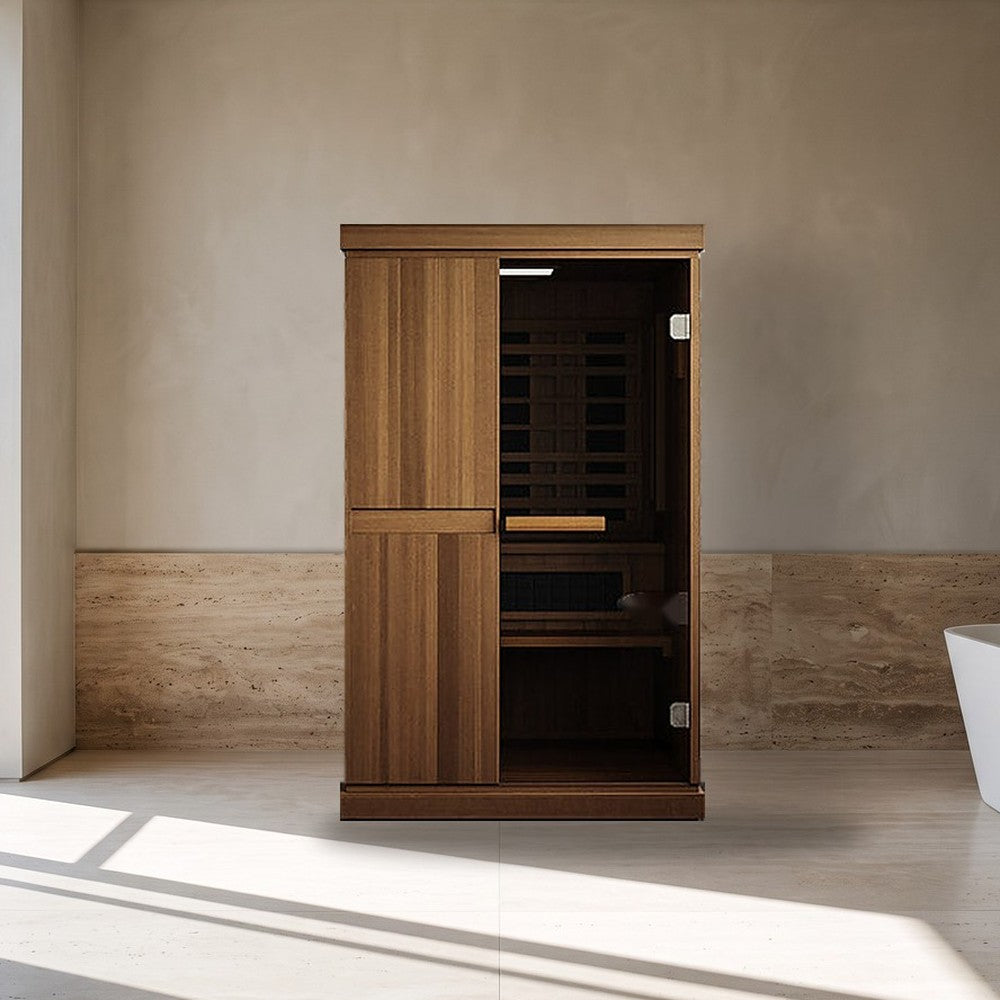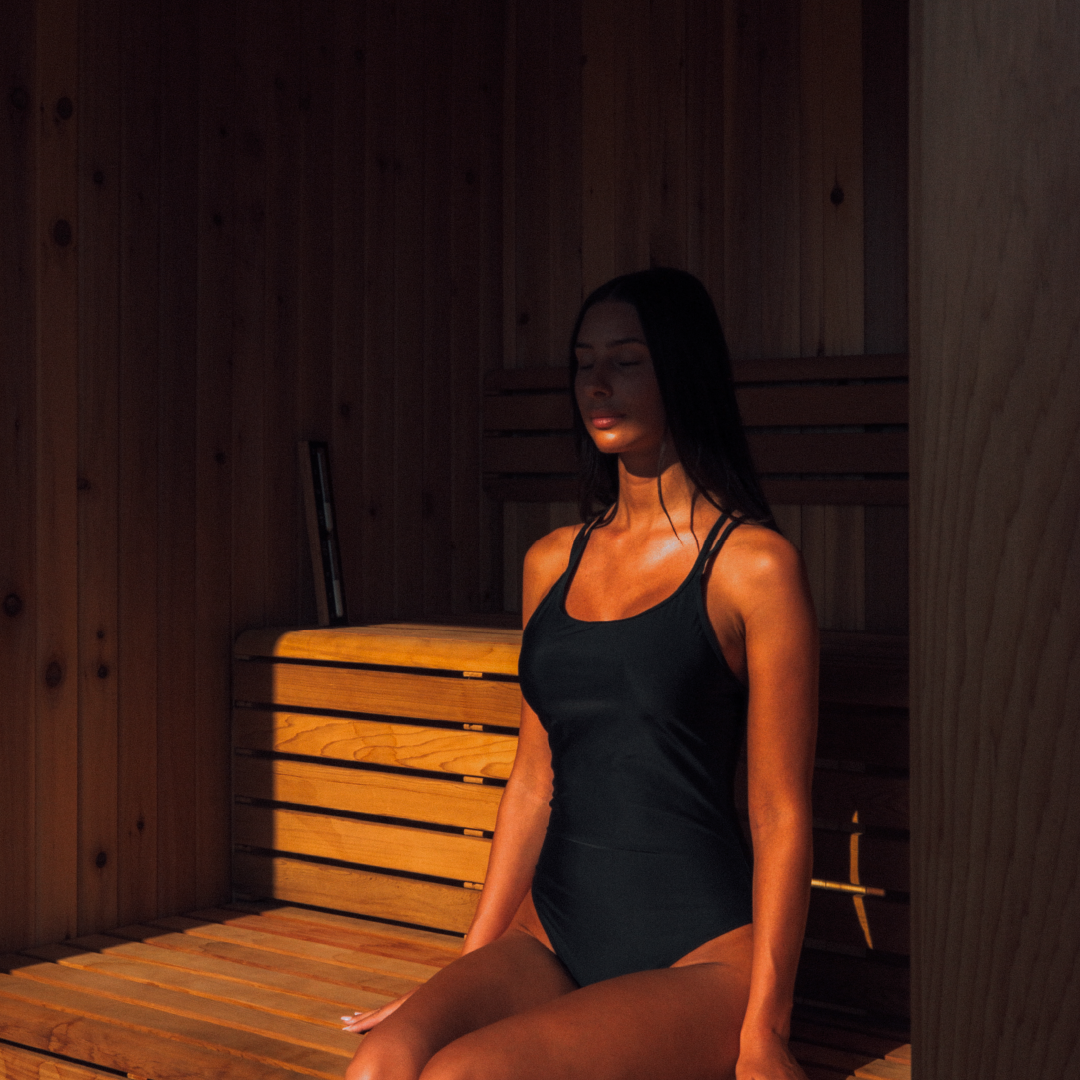
There is a moment — familiar to anyone who has stepped from a bitter Canadian winter into a cedar-lined sanctuary — when the body simply exhales. The enveloping dry heat of a sauna settles over you like a weighted blanket of warm air, drawing tension from muscle and marrow alike. Contrast this with the experience of a steam room: a billowing, humid cloud that clings to the skin, softening it, filling the lungs with moisture. Both are restorative. Both have their devotees. But when it comes to creating a true wellness sanctuary within your home — one that endures Canadian seasons, honours tradition, and deepens in beauty with each passing year — the distinction matters enormously.
Understanding the Difference
At their core, the sauna and the steam room are two entirely different thermal environments, each with its own physiological character.
A traditional sauna operates at temperatures between 70°C and 100°C, with relative humidity kept deliberately low — typically between 10% and 20%. This is the realm of dry, radiant heat: the kind that penetrates deep into tissue, elevates core temperature rapidly, and produces the profuse, cleansing sweat that has been a cornerstone of Nordic wellness ritual for millennia. The addition of water on hot stones — löyly — can momentarily increase humidity, but the air itself remains fundamentally dry and intensely warm.
A steam room, by contrast, operates at a much lower temperature — between 40°C and 50°C — but saturates the air with 100% relative humidity. The heat feels deceptively gentle at first, yet the dense moisture makes it difficult for perspiration to evaporate, creating a sensation of profound warmth that many find either deeply relaxing or uncomfortably oppressive, depending on their constitution.
These are not merely technical distinctions. They define two very different experiences, two different material requirements, and two very different relationships with the space over time.
The Health Benefits of Sauna
The sauna's reputation as a wellness tool is not simply cultural mythology — it is increasingly the subject of serious scientific inquiry, and the findings are compelling. Regular sauna use has been associated with measurable improvements in cardiovascular health, including reduced risk of hypertension and improved arterial compliance. The deep heat stimulates circulation in ways that closely mirror moderate aerobic exercise, elevating heart rate and increasing blood flow to peripheral tissues.
Heat stress also triggers the release of heat shock proteins — molecular chaperones that support cellular repair — as well as endorphins and growth hormone. Athletes have long used sauna sessions for accelerated recovery, reduced muscle soreness, and improved sleep quality. Mental wellness benefits are equally well-documented: the ritual itself — the stillness, the warmth, the deliberate withdrawal from the noise of modern life — cultivates a meditative calm that extends well beyond the session.
For a comprehensive look at what consistent sauna practice can do for the body and mind, we invite you to explore our dedicated guide to sauna health benefits — a resource we have crafted with the same care we bring to every sauna we build.
In Canada, where winters are long, sunlight is scarce, and the psychological weight of cold months can be considerable, the sauna offers something beyond mere physical benefit. It is a ritual of warmth and renewal that is purpose-built for cold climates — a tradition that Nordic and Indigenous cultures alike have understood for generations.
The Case for Steam
To be fair to the steam room: it has genuine virtues. The warm, moist air is particularly soothing for the respiratory system, offering relief for those with sinus congestion or mild respiratory conditions. The humidity is gentle on skin that tends toward dryness, and the lower operating temperature makes steam rooms accessible to those who find intense dry heat overwhelming.
Steam rooms are also a familiar feature of spas and athletic facilities, and for those whose primary association with heat therapy is the spa environment, they carry a certain aesthetic comfort.
That said, for home installation, the steam room presents a set of challenges that are difficult to overlook.
Why Sauna Wins for Home Use
The steam room's fundamental weakness as a home installation is its relationship with moisture. A steam room must be entirely sealed and waterproofed — walls, ceiling, floor, and every penetration — to prevent the relentless 100% humidity from migrating into building structures and causing mould, rot, and condensation damage. The materials are typically tile or acrylic; clinical, cold to the touch, and without the living warmth of wood. Steam generators require careful maintenance, regular descaling, and are prone to mineral buildup that shortens their lifespan. Ventilation must be engineered with precision. In short, a steam room is a demanding installation that fights against the building envelope.
A sauna — and particularly one crafted from kiln-dried Canadian cedar — is an entirely different proposition. Cedar is not merely a building material here; it is the soul of the experience. Canadian cedar is prized globally for its aromatic oils, its natural resistance to moisture and bacteria, and its remarkable thermal properties. It warms quickly, retains heat efficiently, and releases a subtle, resinous fragrance that is itself therapeutic. Over time, cedar darkens and deepens, acquiring a patina that speaks of ritual and use. It does not degrade; it matures.
The sauna's dry environment means that, unlike a steam room, it does not wage war against its own structure. Ventilation is straightforward. Maintenance is minimal — periodic cleaning, occasional re-oiling of benches, and the simple ritual of heating the stones. A well-crafted sauna, properly maintained, will serve a Canadian household for decades.
There is also the question of authenticity. The sauna is one of humanity's oldest and most enduring wellness rituals — a tradition with roots in Finland that has spread across Scandinavia, Russia, and into the homes of discerning Canadians who understand that some things cannot be improved upon, only honoured.
We invite you to explore our full sauna collection and discover the range of forms this tradition can take in a contemporary home.
Traditional vs. Infrared Saunas — A Third Option
Within the world of saunas, there exists a meaningful distinction worth understanding: the traditional Finnish sauna versus the infrared sauna. Both belong to the same wellness lineage, but they work differently and suit different contexts.
A traditional sauna uses a wood-burning or electric sauna heater (kiuas) to heat rocks, which in turn radiate heat into the room. The experience is social and ceremonial — the ritual of ladling water over stones, the immediate rush of steam, the communal silence. Temperatures are high, sessions are intense, and the cold plunge that follows is part of the rhythm.
An infrared sauna operates at lower temperatures — typically 45°C to 65°C — using infrared emitters to heat the body directly rather than the surrounding air. The experience is gentler and more accessible, particularly for those who find high-heat environments overwhelming. Many wellness practitioners favour infrared for its deeply penetrating warmth and its suitability for longer, more meditative sessions.
Neither is superior in absolute terms; they are complementary expressions of the same therapeutic tradition, suited to different bodies, preferences, and spaces. Our cedar barrel saunas and indoor cedar cube saunas offer both traditional and infrared configurations, allowing you to choose the experience that resonates most deeply.
The Auroom Collection — Finnish Design Meets Canadian Craftsmanship
Among the collections we are privileged to carry, the Auroom range occupies a singular position. Born in Estonia and rooted in the unbroken Finnish sauna tradition, Auroom saunas represent a convergence of rigorous Nordic design philosophy and artisan-level craftsmanship that we believe is unmatched in the contemporary market.
Every Auroom sauna is conceived as a piece of considered architecture — clean lines, honest materials, spaces that feel contemplative rather than merely functional. The joinery is precise. The cedar is selected for quality and character. The heaters are positioned for optimal heat distribution. And the overall aesthetic integrates seamlessly into sophisticated residential interiors, whether that means a sunlit bathroom extension, a dedicated wellness room, or a garden pavilion surrounded by birch and spruce.
Highlights from the Auroom sauna collection include:
- The Superior Hydra Sauna — a statement piece that combines traditional heat ritual with a refined, contemporary silhouette. Ideal for those who view their sauna as both a wellness tool and a design object.
- The Neptune Sauna — crafted for intimacy and immersion, the Neptune is the choice for those who seek a deeply personal ritual space, scaled for daily use and enduring beauty.
- The Orion Sauna — our most architecturally ambitious offering, the Orion commands attention. It is a sauna for those who believe that the wellness space should be the most extraordinary room in the home.
For those who envision their sauna as part of an outdoor sanctuary — a cedar structure set against the boreal landscape of a Muskoka property, or nestled in a lakeside garden — our outdoor sauna collection offers purpose-built solutions for year-round use in the Canadian climate.
Making the Decision
For those still weighing the two options, the following comparison distills the essential considerations:
| Factor | Traditional Sauna | Steam Room |
|---|---|---|
| Operating Temperature | 70–100°C | 40–50°C |
| Humidity | 10–20% (controllable) | 100% |
| Primary Material | Artisan cedar (natural, aromatic) | Tile or acrylic (clinical) |
| Installation Complexity | Moderate — standard electrical, minimal waterproofing | High — full waterproofing, sealed envelope required |
| Maintenance | Low — periodic cleaning and bench care | High — regular descaling, mould prevention, generator servicing |
| Longevity | Decades with basic care | 10–15 years before significant refurbishment |
| Wellness Benefits | Cardiovascular, muscular, mental, metabolic | Respiratory, skin hydration, relaxation |
| Cultural Authenticity | Millennia of tradition; a living ritual | Primarily spa-context association |
For a Canadian home — where winters demand warmth, where cedar is part of the landscape and the heritage, and where the wellness ritual should be something you return to every single day — the sauna is not merely the better choice. It is the natural one.
Your Sauna, Designed for You
A sauna is not a purchase. It is an investment in how you inhabit your home — in the quality of your evenings, the depth of your recovery, the intentionality of your wellness practice. At Muskoka Sauna Co., we have spent years curating and crafting saunas for Canadians who understand this distinction. Our advisors are not salespeople; they are sauna specialists who will guide you through every consideration — from spatial planning and electrical requirements to cedar selection and heater configuration — until you have a solution that is precisely, perfectly yours.
Request a personalised quote and discover which sauna is perfectly matched to your home and lifestyle.
Still weighing your options? Our specialists are here to help — a conversation costs nothing, and it often changes everything.
When you are ready to begin, we invite you to explore our full sauna collection — and to imagine what your mornings, your evenings, and your winters might feel like with a sanctuary of your own.
Frequently Asked Questions
Is a sauna or a steam room better for my health?
Both offer genuine wellness benefits, but the research base for sauna — particularly traditional Finnish sauna — is significantly more robust. Studies have linked regular sauna use to improved cardiovascular health, reduced inflammation, enhanced recovery, and improved mental wellbeing. Steam rooms offer benefits particularly for respiratory health and skin hydration. For most people seeking a comprehensive home wellness practice, the sauna provides a broader and more deeply studied range of benefits. Learn more on our sauna health benefits page.
Which is easier to install in a Canadian home?
A sauna is considerably more straightforward to install. It requires standard electrical work (typically a dedicated 240V circuit), minimal waterproofing relative to its footprint, and no specialised steam plumbing. A steam room, by contrast, demands a fully sealed, waterproofed enclosure and a steam generator with its own water supply, drainage, and descaling maintenance schedule. In Canadian climates, where building envelopes must manage significant temperature differentials, the steam room's moisture demands add meaningful complexity.
How much maintenance does a home sauna require?
Very little. A cedar sauna should be wiped down after each use and aired out thoroughly. Benches may benefit from occasional light sanding or oiling over the years. The heater — whether electric or wood-burning — requires periodic inspection and element replacement on a multi-year cycle. By contrast, steam generators typically require monthly descaling, regular inspection of seals and gaskets, and more frequent servicing overall. The sauna's simplicity is one of its great virtues.
Can I use a sauna year-round in Canada?
Absolutely — and many would argue that the Canadian winter is precisely when a sauna reveals its fullest value. The contrast between the fierce cold outside and the enveloping heat within is a sensory experience that is almost impossible to replicate any other way. Our outdoor sauna collection is engineered for year-round Canadian use, with construction and insulation specifications that perform beautifully from the depths of a Muskoka January to the warmth of a summer evening.
What is the difference between traditional and infrared saunas?
Traditional saunas heat the air and rocks to high temperatures (70–100°C), producing the intense, enveloping heat of the classic Finnish experience. Infrared saunas use radiant emitters to heat the body directly at lower ambient temperatures (45–65°C), creating a gentler, more accessible experience that many find ideal for longer, more meditative sessions. Both have their place in a thoughtful wellness practice. Speak with our specialists to determine which configuration best suits your lifestyle and goals.